
WHAT IS VENCLEXTA AND HOW DOES IT WORK?
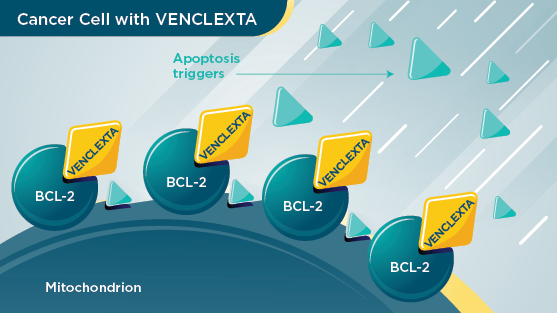
VENCLEXTA contains the active ingredient venetoclax. It works by blocking a protein in the body called BCL-2 that helps cancer cells survive. It is therefore known as a BCL-2 inhibitor.
VENCLEXTA sticks to the BCL-2 and blocks it. Without the help of the BCL-2 protein, the cancer cells die.
HOW DOES OBINUTUZUMAB WORK?
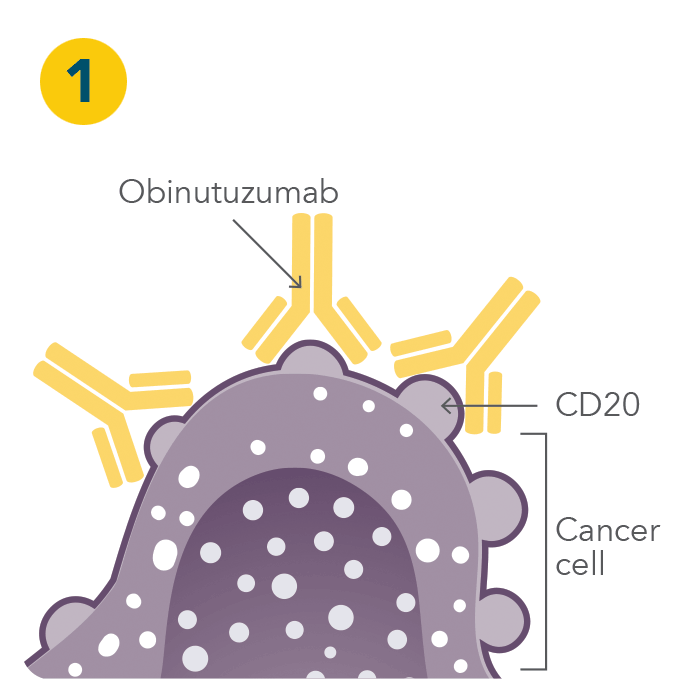
Obinutuzumab works in a different way to VENCLEXTA. It is known as a CD20 antibody.
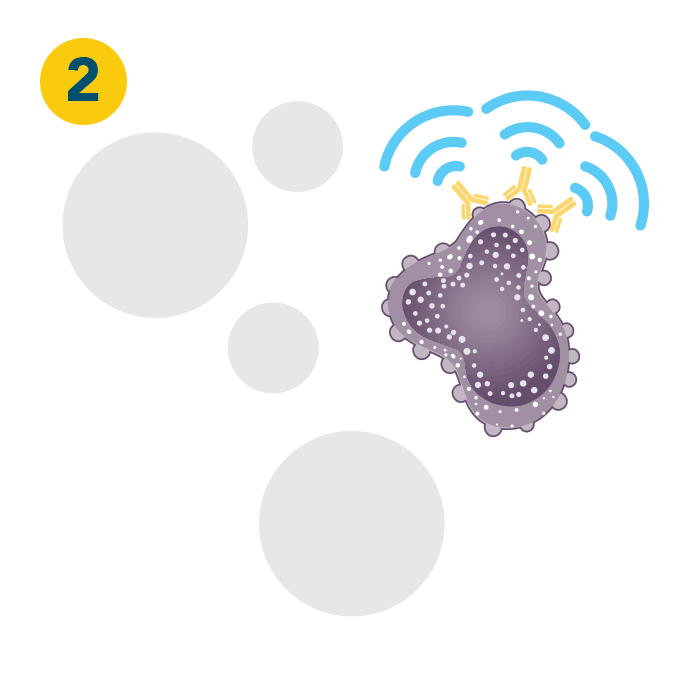
CD20 is a type of protein (an antigen) found on the surface of some cells in the body, including CLL cancer cells. Obinutuzumab attaches to the CD20. Once it attaches, it stops the abnormal growth of the cancer cells.
For more information about rituximab, refer to the Consumer Medicine Information or speak with your doctor or pharmacist.
WHAT IS YOUR TREATMENT PLAN?
There are 3 main phases of treatment lasting about 1 year in total:
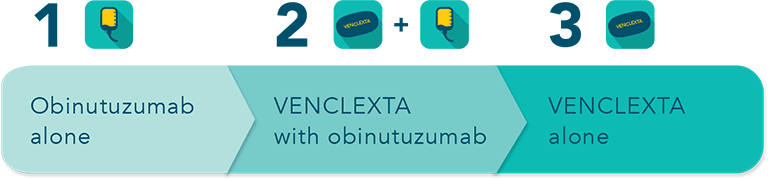
Phase 1 - Obinutuzumab alone
Your treatment begins with obinutuzumab alone for the first month. Obinutuzumab is given by IV infusion at your treatment centre. Your healthcare team will give you details about your infusion appointments.

Do not stop using VENCLEXTA or change your
dose without checking with your doctor.
Phase 2 - VENCLEXTA with obinutuzumab
After the first 3 weeks of obinutuzumab treatment, VENCLEXTA is added to your treatment. During the first 5 weeks, your VENCLEXTA dose is gradually increased (the dose ramp-up), but your doctor may extend this ramp up period based on your response to the therapy. The” ramp up” is important because certain side effects are more likely to occur when first starting treatment. You will then continue taking VENCLEXTA and obinutuzumab together for a total of 6 cycles (28 days each), including the first month discussed in Phase 1.
Phase 3 - VENCLEXTA alone
After your last obinutuzumab infusion, you will continue taking the full dose of your VENCLEXTA treatment (400 mg tablets per day) until you have completed 12 months of treatment in total, unless your doctor tells you to stop or reduces the dose temporarily.
Once you reach the end of the 12 “cycles” since treatment began (about a year in total), you have finished treatment and your doctor will tell you to stop taking your VENCLEXTA tablets.
HOW DO I TAKE VENCLEXTA?
Take VENCLEXTA exactly as your doctor has prescribed.
If you have questions about how to take VENCLEXTA, ask your doctor or pharmacist.
Dose ramp-up - 5 weeks
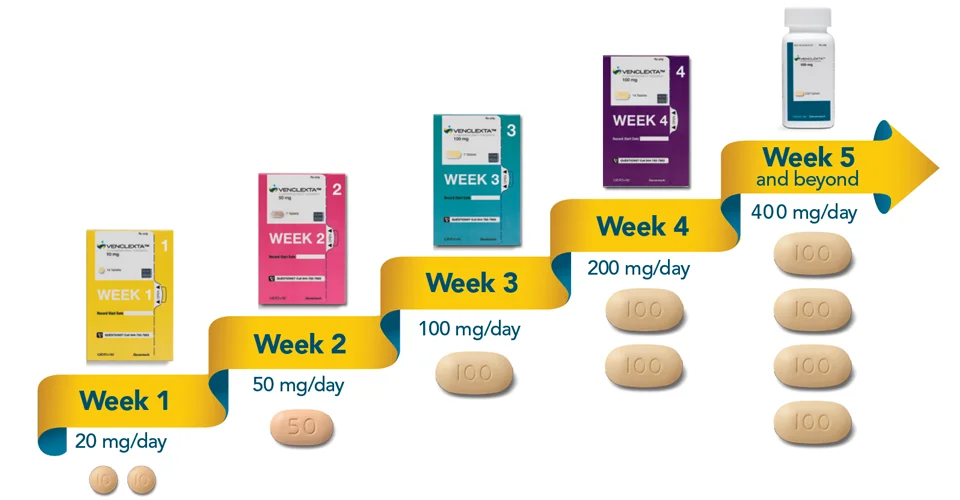
Tablets not actual size
How to take VENCLEXTA
- Take the tablets during or immediately after a meal, at about the same time every day.
- Swallow the tablets whole with a full glass of water.
- DO NOT chew, crush or break the tablets.
Staying hydrated
It is important to stay hydrated when taking VENCLEXTA and drink about 6 to 8 glasses (1.5 to 2 litres) of water each day as instructed.
Make especially sure you drink your 6-8 glasses of water on these days:
- The two days before, and the day that you take your first VENCLEXTA dose.
- The two days before, and the day you increase your VENCLEXTA dose.

Other important things to remember
- DO NOT eat grapefruit (or drink its juice), Seville oranges (or marmalades) or starfruit - these may increase the amount of VENCLEXTA in your blood.
- DO NOT change your dose unless your doctor tells you to.
- DO NOT start any new medicines without talking to your doctor, nurse or pharmacist first.
- DO tell your doctor if you are taking any other medicines, including over-the-counter medicines, vitamins or supplements.
If you miss a dose of VENCLEXTA
It is important not to miss a dose of this medicine.
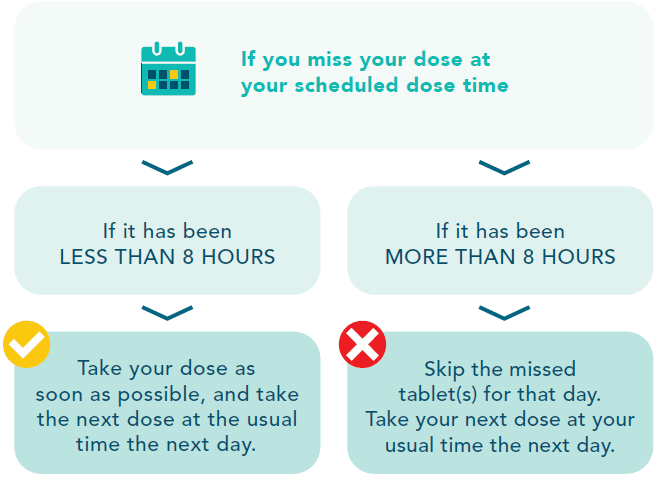
If you vomit after taking VENCLEXTA, do not take an extra dose. Take the correct dose at your usual time the next day. If you are unsure, talk to your doctor, nurse or pharmacist.
If you take too much VENCLEXTA
If you think you (or anyone else) may have taken too much VENCLEXTA, immediately telephone your doctor or the National Poisons Centre on 0800 764 766, or go to Accident and Emergency at your nearest hospital.
Do this even if there are no signs of discomfort or poisoning.
WHAT ARE VENCLEXTA'S SIDE EFFECTS?
Like all medicines, VENCLEXTA can have side effects and sometimes they can be serious.
It is important to be aware of the potential side effects so you can get help immediately if needed.
Serious side effects
Contact your doctor or go to the Emergency Department immediately if you are experiencing either:
- Tumour Lysis Syndrome (TLS)
- Low white blood cell count (neutropenia) and infection
Less serious side effects:
- Diarrhoea, tummy pain, constipation
- Nausea, vomiting
- Reduced appetite, weight loss
- Mouth sores, looking pale
- Fatigue, low energy
- Shortness of breath when exercising
- Dizziness, headache, low blood pressure, bleedingRead more important safety information including symptoms and prevention of TLS and the symptoms of infection.
For full safety information please see the Consumer Medicine Information.
QUESTIONS TO ASK YOUR DOCTOR ABOUT VENCLEXTA
You may have many questions for your doctor about VENCLEXTA and sometimes it can be hard to remember everything.
Here are some to get you started:
- What is this medicine?
- Can I take it from home or do I need to go to a clinic?
- Are there any special dietary requirements?
- How long will I need to take it?
- How will it make me feel?
- What can you tell me about any side effects?
- How will we know if it is working?
- What can I do to reduce or manage side effects?
- When should I start?
- What other options are available to me?
- Who should I contact if I have questions?
LOOKING AFTER YOURSELF DURING TREATMENT
Being diagnosed with cancer and going through treatment is stressful. Looking after yourself - in body and mind - can make a real difference to how you feel during treatment.

Good nutrition helps your body cope with treatment and any side effects. Your healthcare team can refer you to a dietitian if needed. Try to eat a balanced diet with plenty of fruit and vegetables, whole grains, lean proteins and healthy fats.

Physical activity may help reduce fatigue and has broader health benefits. Everyone's capabilities are different - speak to your doctor before starting or continuing any exercise programme. Even gentle activity like short walks can be beneficial.

Feeling anxious or overwhelmed is a normal response to a cancer diagnosis. If you are feeling depressed or anxious, speak to your doctor. Connecting with others who understand what you are going through can also help.

Try not to isolate yourself. Talk openly with family and friends about how you are feeling if you feel comfortable doing so. Setting small daily goals can help maintain a sense of purpose and routine.
VENCLEXTA is given for a fixed duration - approximately 12 months for VEN+O. When the time comes to stop, you may feel a mix of emotions - relief that treatment is over, but also anxiety about what happens next. This is completely normal. Your healthcare team will continue to monitor you after treatment ends. If your CLL returns, your doctor will discuss your options with you. Take your time to adjust at your own pace.
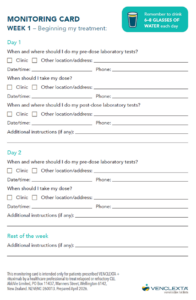
DOWNLOAD YOUR WEEKLY MONITORING CARDS
During the 5-week ramp-up, regular blood tests are required to monitor for Tumour Lysis Syndrome (TLS).
Download your weekly monitoring card to record your appointment details and dose for each week.
CAN VENCLEXTA INTERACT WITH OTHER MEDICINES?
VENCLEXTA can interact with other medicines, vitamins, herbal products and supplements.
Always tell your doctor and pharmacist about everything you are taking before starting VENCLEXTA, and before starting any new medicines.'
Check with your doctor or pharmacist if you are unsure about any medicines, vitamins or supplements you are taking.
Download your Treatment Guide for further details about possible interactions during your treatment.
For a full list of medicines that can interact with VENCLEXTA, see the Consumer Medicine Information.
SUPPORT AND RESOURCES
Your treatment guide
Download the VEN+O treatment guide (PDF) for detailed information about your treatment.
Support and resources
Blood Cancer New Zealand
Free support and information for people affected by blood cancers and their families.
Phone: 0800 15 10 15
Email: info@bloodcancer.org.nz
Website: www.bloodcancer.org.nz
CLL Advocates NZ
Peer support and advocacy for people living with CLL and their whanau.
Email: info@clladvocates.nz
Website: www.clladvocates.nz
NZ-VEN-xxxxxx. TAPS BGxxxx. ONO0212. September 2026.
For more information about AbbVie, the maker of VENCLEXTA, visit www.abbvie.co.nz
For medical information enquiries regarding VENCLEXTA please contact medinfoanz@abbvie.com



The content on this site is intended solely for New Zealand residents. The information is intended for informational purposes only and should not be used to replace a discussion with a healthcare professional. All decisions made regarding patient care must be handled by a healthcare professional and be made based on the unique needs of each patient. This website has been developed and is funded by AbbVie Limited, Wellington. The person shown is from stock photography (model) and is not an actual patient.
VENCLEXTA in combination with obinutuzumab or ibrutinib is fully funded for untreated chronic lymphocytic leukaemia (CLL). VENCLEXTA in combination with rituximab is fully funded for relapsed/refractory CLL. VENCLEXTA in combination with azacitidine or low dose cytarabine is fully funded for acute myeloid leukaemia (AML). Special Authority criteria apply. Refer to the VENCLEXTA PHARMAC Special Authority criteria.
IMPORTANT INFORMATION ABOUT VENCLEXTA®
VENCLEXTA® is a prescription medicine containing venetoclax. Venclexta is available as film-coated tablets of various strength (10 mg, 50 mg, 100 mg venetoclax). It is used to treat adults with chronic lymphocytic leukaemia (CLL) or small lymphocytic lymphoma (SLL) or acute myeloid leukemia (AML). Venclexta is taken alone or in combination with other medicines. Your doctor will let you know which combination medicines, how to take them, and how long to take them. Typically, you will start treatment with Venclexta at a low dose. If you are taking Venclexta for CLL or SLL, your doctor will gradually increase your dose over 5 weeks up to the full dose. If you are taking Venclexta for AML, your doctor will gradually increase your dose up to the full dose over 3, or 4 days, depending on the combination medicine used. Use strictly as directed by your doctor. Venclexta has risks and benefits. You must not take it if you are allergic to venetoclax or to any of the inactive ingredients. For CLL or SLL, do not take Venclexta if you are taking any of the following medicines: medicines used to treat or prevent fungal infections, including ketoconazole, posaconazole, voriconazole, itraconazole; clarithromycin (an antibiotic); or ritonavir (a medicine used to treat HIV and hepatitis C). Do not drink grapefruit juice, or eat grapefruit, starfruit or Seville oranges or marmalades. Do not give Venclexta to children and adolescents under 18 years of age. Do not take Venclexta if you are pregnant or plan to become pregnant, or if you are breastfeeding or plan to breastfeed. If you are a woman of child-bearing age, you must use a highly effective form of contraception during treatment with Venclexta and for at least 30 days after your last dose. Tell your doctor, nurse, or pharmacist if you have any kidney or liver problems; if you think you may have an infection; or if you recently received or are scheduled for any vaccinations. Do not stop using Venclexta or change the dose without checking with your doctor. Venclexta can cause tumour lysis syndrome (TLS), which is caused by the fast breakdown of cancer cells. TLS is a very serious side effect that can be fatal. TLS is most likely to occur when you are first starting treatment. To help prevent TLS, it is important to stay hydrated and drink water every day when taking Venclexta. Particularly, starting two days before and on the day of your first dose of Venclexta and every time the dose is increased, drink 6 to 8 glasses (approximately 1.5-2 L total) of water each day. Let your healthcare provider know immediately if you experience: fever or chills; feeling sick or vomiting; being short of breath; feeling unusually tired; changes in your heart rate (slow, fast or irregular); your urine looks dark or cloudy; feeling confused; convulsions or fits; or pain in the muscles or joints while on treatment with Venclexta. Ensure you follow all your doctor’s instructions carefully and keep all your appointments, including those for blood tests. You may experience a low number of neutrophils, a type of white blood cells – this can be severe and need treatment. Your doctor will check your blood counts during treatment with Venclexta. You may experience infections during treatment with Venclexta. Some infections can be very serious or even fatal. Your doctor will closely monitor and treat you right away if you have fever or any signs of infection during treatment with Venclexta. Tell your doctor immediately if you have signs of an infection before, or while taking Venclexta, including: fever or chills, feeling weak or confused, cough, runny nose, sore throat; congestion on the chest; or pain or burning when passing urine. Some of the less serious side effects of Venclexta include diarrhoea; tummy pain; constipation, nausea (feeling sick); vomiting; reduced appetite; weight loss; mouth sores; looking pale; feeling tired; having little or no energy; shortness of breath when exercising; feeling dizzy; headache; low blood pressure; bleeding. Tell your doctor or pharmacist if you notice anything else that is making you feel unwell. Some medicines and Venclexta may interfere with each other, so tell your doctor if you are taking medicines containing any of the following: ketoconazole, posaconazole, voriconazole, itraconazole, fluconazole, clarithromycin, ciprofloxacin, erythromycin, ritonavir, diltiazem, verapamil, captopril, felodipine, dronedarone, amiodarone, quinidine, rifampicin, carvedilol, ciclosporin, quercetin, ranolazine, ticagrelor, azithromycin, nafcillin, carbamazepine, phenytoin, St John’s wort (Hypericum perforatum), bosentan, efavirenz, etravirine, modafinil, warfarin, digoxin, everolimus, or sirolimus. Tell your doctor or pharmacist if you are taking any other medicines, including any medicines, vitamins or supplements that you buy without prescription. Tell any other doctors, pharmacists, dentists, or surgeons treating you that you are taking Venclexta and remind them before you start any new medicines. If you have any questions about using Venclexta, including its risks and benefits, how much to use, how and when to use it, or storage conditions, ask your healthcare professional and refer to the Consumer Medicine Information (CMI) available from www.medsafe.govt.nz or free phone 0800 900 030. Ask your doctor if Venclexta is right for you. Use strictly as directed. If symptoms continue, or you have side effects, see your doctor, pharmacist, or healthcare professional. V7a.
©2026 AbbVie. All rights reserved. AbbVie® is a registered trademark of AbbVie Inc. VENCLEXTA® and its designs are registered trademark of AbbVie Manufacturing Management Unlimited Company. AbbVie Limited, Wellington 6011, New Zealand TAPS BGxxxx. NZ-VEN-200006. ONO0212. September 2026.